Services
Home Cinema Design & Installation in London
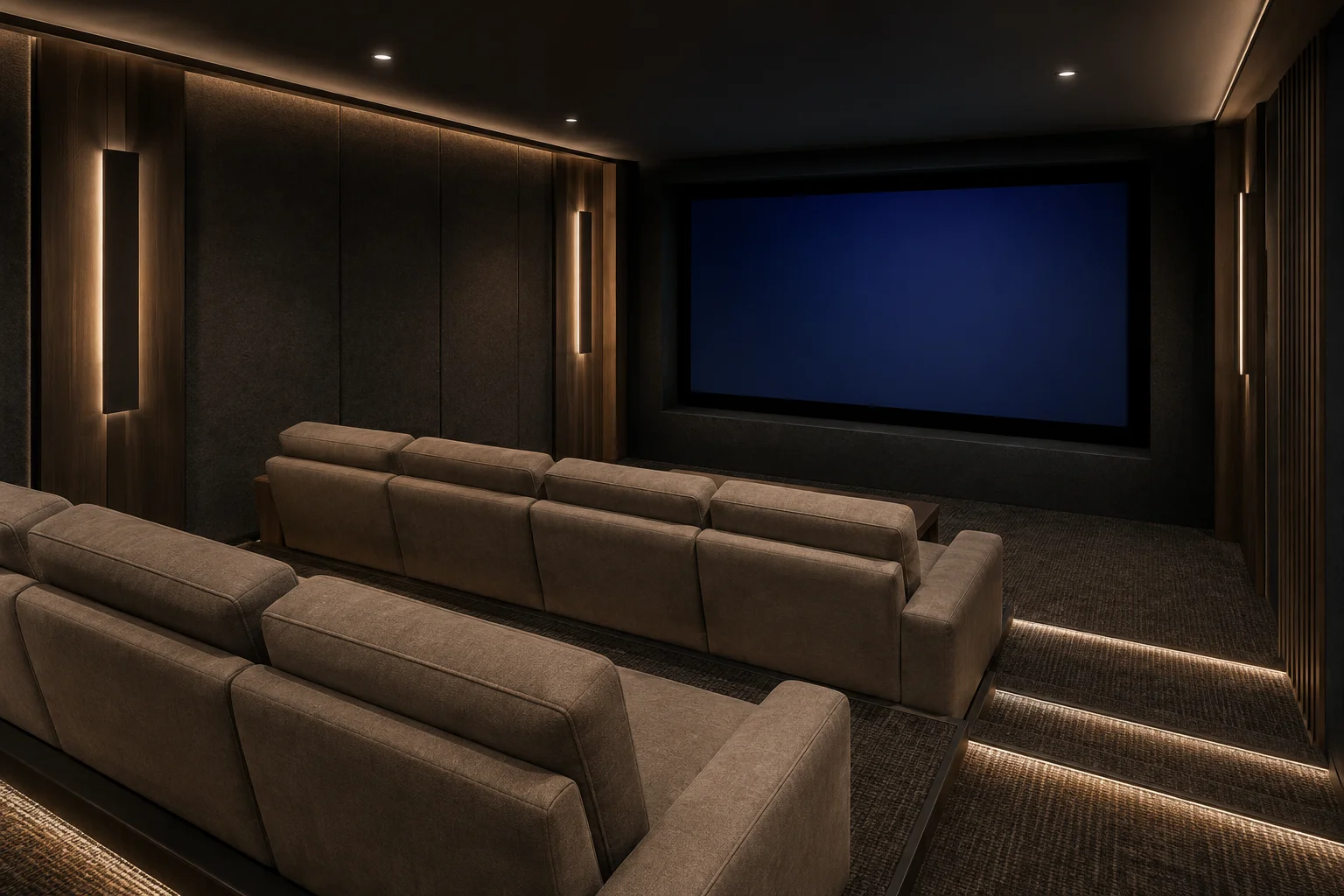
Bring the cinema experience home with considered picture, sound, acoustics, seating and lighting, designed and installed around you.
Explore Home Cinema Design & Installation in London
Insights
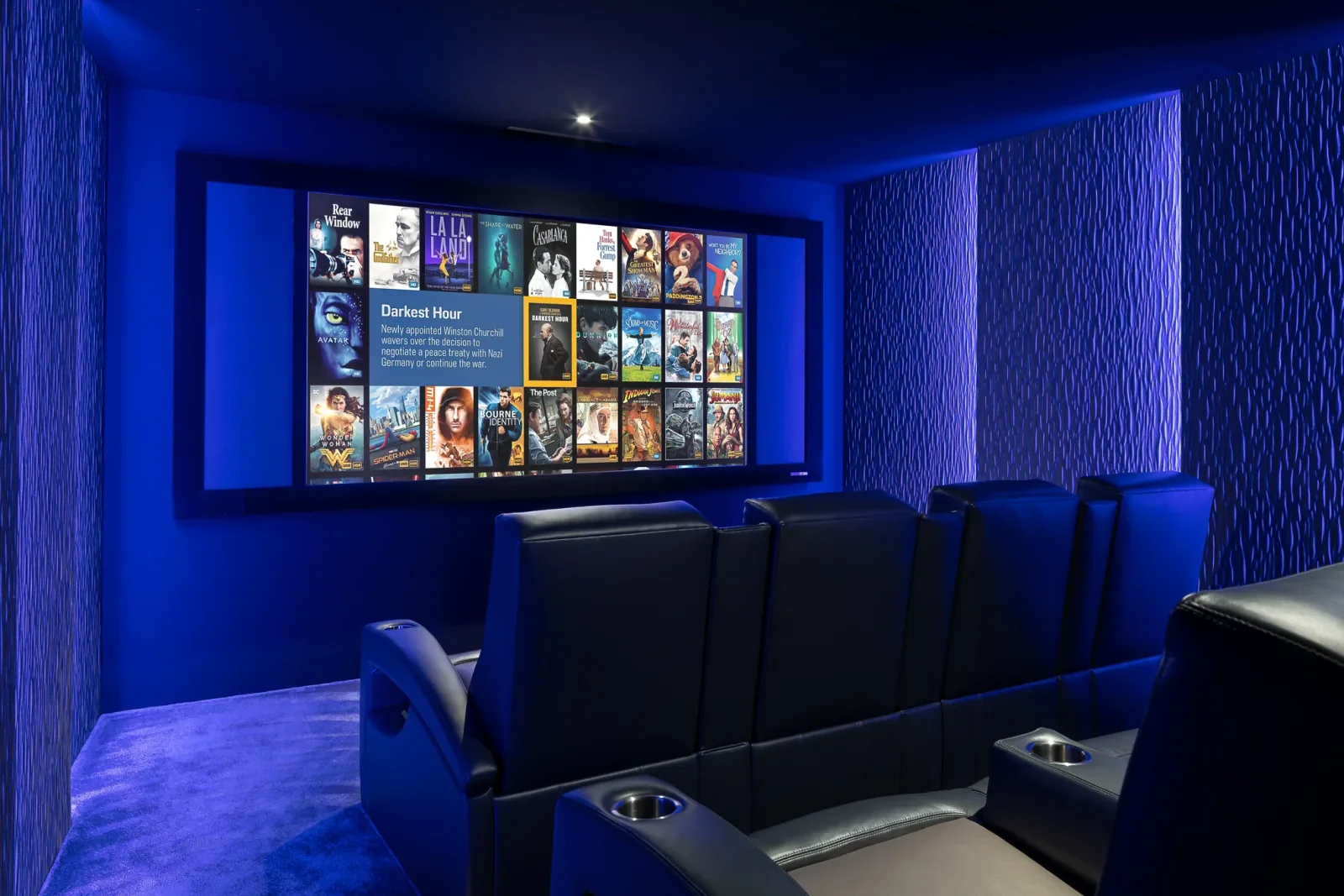
See how a London home cinema moves from room brief and technical design through first fix, installation, calibration and handover.
A great home cinema starts with the room and the people who will enjoy it. We bring the picture, sound, seating, lighting and controls into one design, whether the project is a London basement, a dedicated room or part of a wider refurbishment.
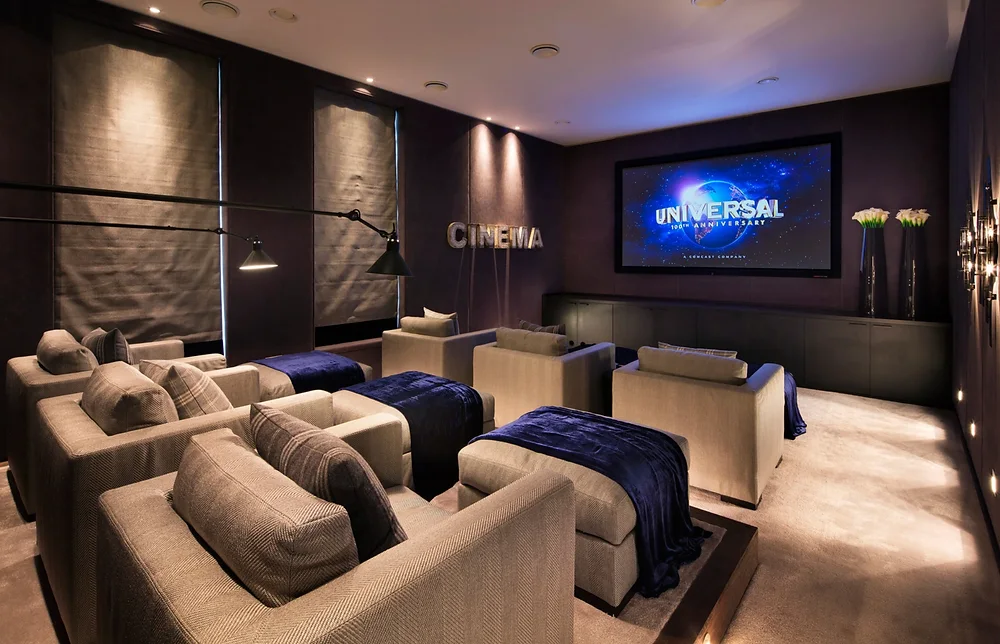
We first establish who will use the room, how many seats are genuinely needed and whether the priority is films, sport, gaming or a mixture. We also ask what should be visible when the system is off. Those answers shape the screen, speakers, lighting, control and interior far more usefully than choosing equipment in isolation.
If you are still deciding between a dedicated room and a shared living space, read our cinema room versus media room guide. For scope and budget planning, use our separate home cinema planning guide.
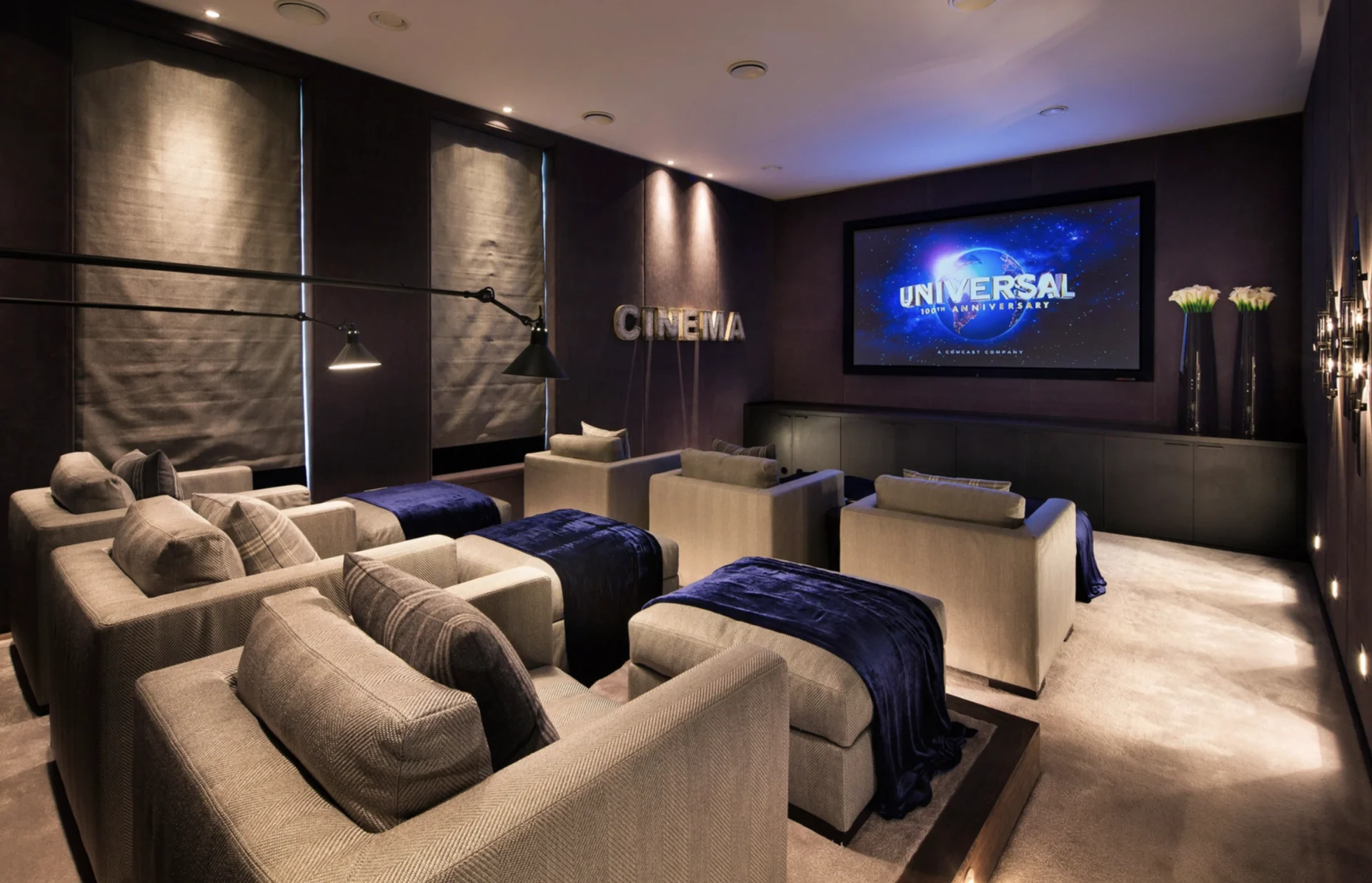
We plan sightlines and speaker positions around the room dimensions, ceiling, windows and seating. The survey brings cabling, power, networking, ventilation and future access into the same design. In an existing home, we also test the equipment and infrastructure that can form part of the new installation.
The technical design brings together screen size, viewing distance, speaker layout, equipment location, lighting scenes and the build details needed by the wider team. It should show what belongs in the walls and ceiling before those surfaces are closed.
Acoustic treatment shapes the sound inside the cinema, while sound isolation reduces sound passing between spaces. We coordinate both with the room’s construction and the relevant specialists, so dialogue, impact and the needs of neighbouring rooms are considered together.
Speaker, projector, screen, control and network cables need sensible routes and identification at both ends. Backboxes, supports, ventilation openings and equipment locations should match the coordinated drawings. This is the stage where a small detail can prevent a large amount of rework later.
Once the room is ready, the equipment is installed, labelled and tested. Control should be simple enough that the household can start a film without thinking about inputs, audio modes or lighting circuits. Programming is then checked against the agreed room scenes and day-to-day use.
We calibrate the system in the completed room: picture settings, speaker levels, distances, crossovers and room correction. Measurements, listening and viewing checks help us achieve clear dialogue, balanced sound and a picture you can enjoy from your chosen seat.
We finish with a demonstration, your agreed access, equipment records and a clear support contact. We also coordinate any remaining items with the project team, so you know how to use the room and who will look after it.
Share your room plan or photographs and tell us about the films, sport or games you enjoy. Our cinema team will help turn the ideas into a room you look forward to using.
Continue exploring
Services
Bring the cinema experience home with considered picture, sound, acoustics, seating and lighting, designed and installed around you.
Explore Home Cinema Design & Installation in LondonInsights
Plan your home cinema around the picture, sound, seating and budget you want, with design and installation brought into one complete proposal.
Explore Planning a Home Cinema: Scope, Design and BudgetInsights
Compare a dedicated cinema room with a flexible media room, including light, acoustics, seating, first fix, control and budget priorities.
Explore Cinema Room vs Media Room: Which Suits Your London Home?