Services
Rako Lighting Repairs in London
Restore reliable Rako lighting, refresh your favourite scenes and get ongoing support for an existing London home.
Explore Rako Lighting Repairs in London
Insights
Plan a useful Rako service visit: understand your existing lighting, check lamp compatibility, refine room scenes and keep clear records for future support.
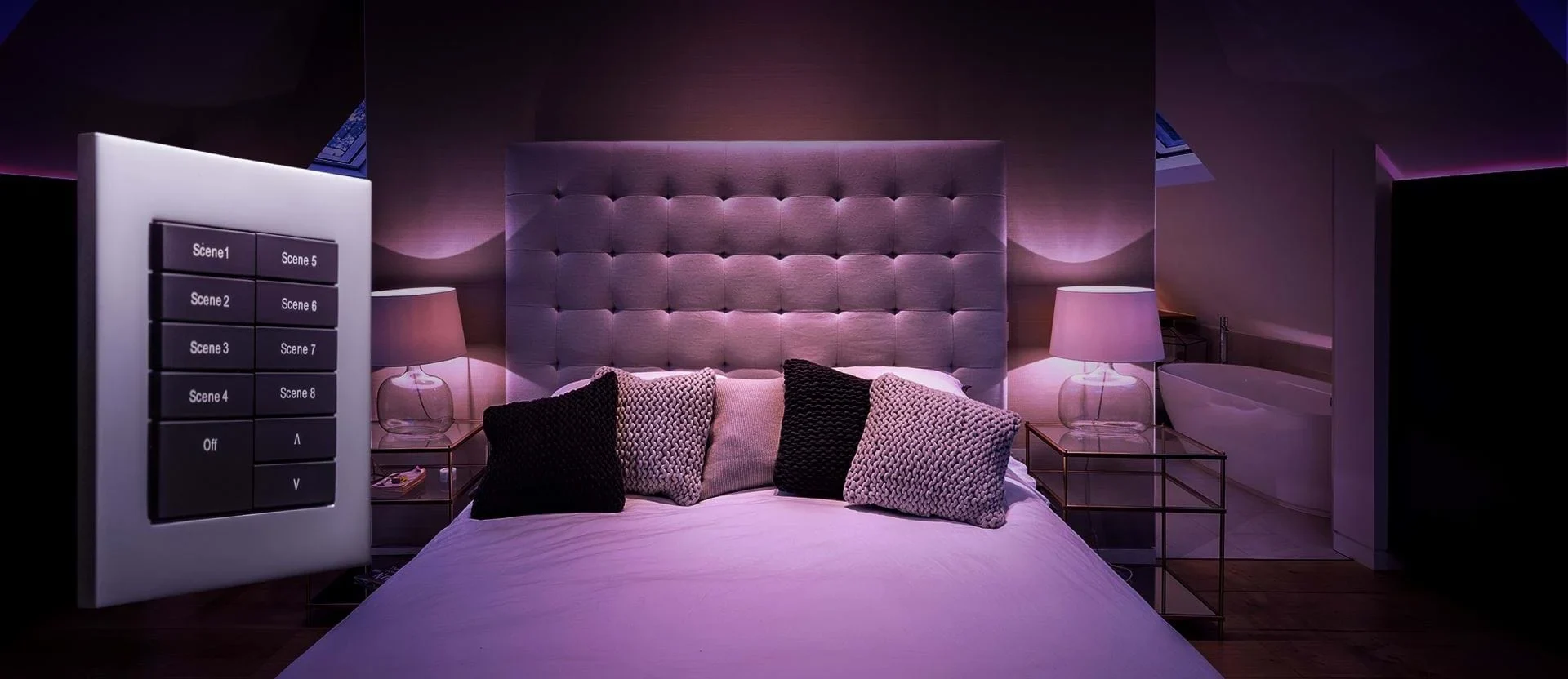
A well-set-up Rako system makes a room feel right with a single button. The table is lit for dinner, the reading chair has enough light, and the rest of the room sits comfortably in the background. A service visit is a chance to restore that simplicity and adjust the lighting to the way you use your home today.
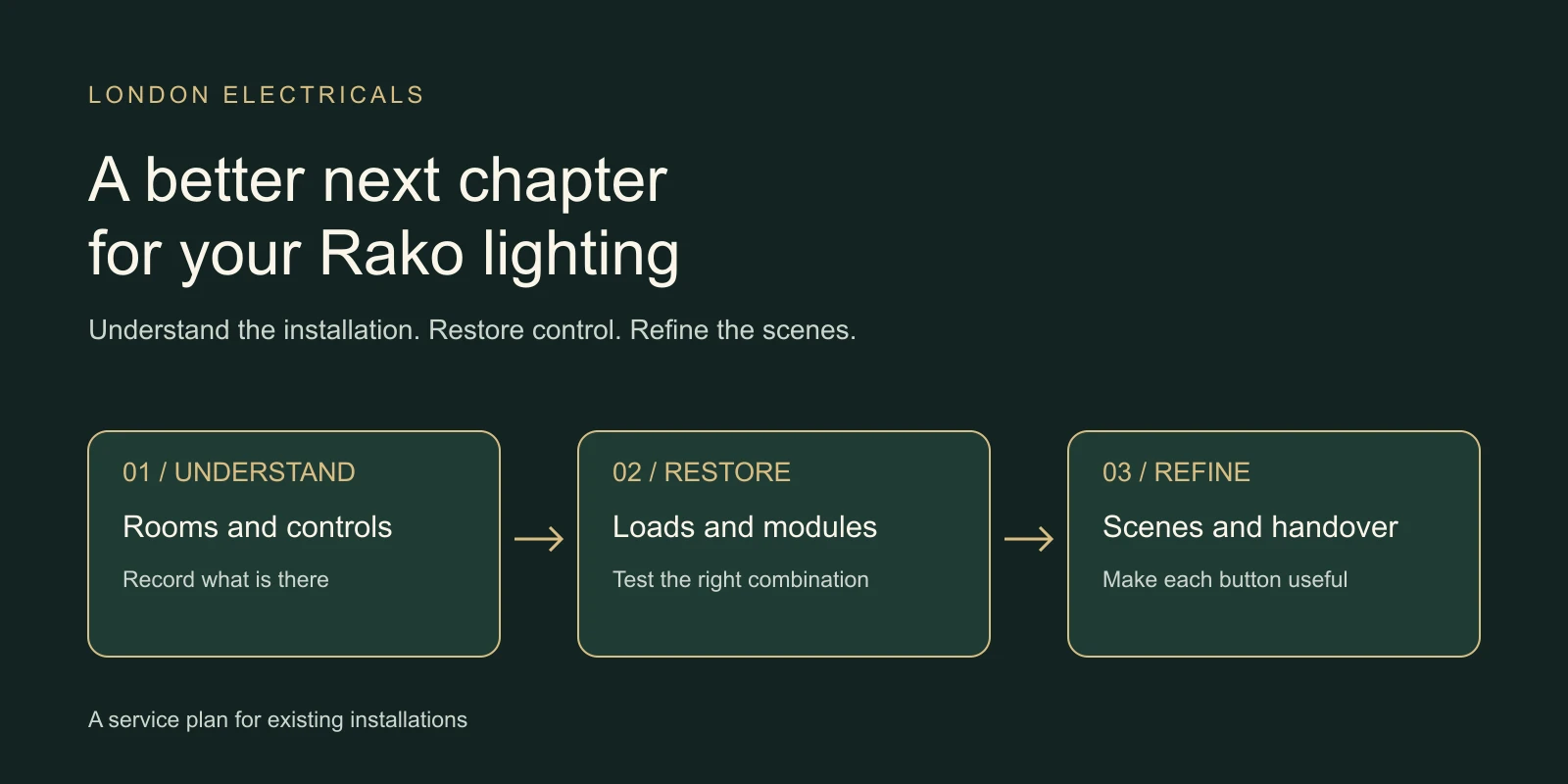
You may have inherited the installation, changed some fittings or simply found that the original scenes no longer suit you. We start by understanding what is already there, then bring the controls, lighting loads and programming together. Here is how to prepare for that conversation and get a useful result from it.
Before looking at replacement equipment, think about the moments when the lighting should work better. Perhaps the kitchen is fine for cooking but too bright when you sit down to eat. The sitting room may need a reading scene rather than every light coming on together. In a bedroom, you might want the bedside controls to behave more predictably.
These details give a programming visit a clear purpose. We can work through the scenes in the actual room, taking account of furniture, finishes and the fittings you have. A good result is not the largest number of scenes. It is a small, useful set that everyone can understand.
If something has stopped working, make that the first priority. Our Rako lighting repair service in London covers fault diagnosis and repair planning. This guide explains how we approach the existing installation and the improvements that can follow.
A few observations help us plan the visit. Note the affected room, the button or scene you pressed, what you expected and what happened. Include whether the behaviour is consistent or intermittent, and whether it started after another change.
Useful details include a lamp replacement, new LED fittings, building work or a router change. Tell us whether wall controls and app controls behave differently. A short video can explain flickering more clearly than a long description, especially if it shows the light level at which it happens.
Photographs of accessible keypads and existing labels are helpful. There is no need to open electrical enclosures or remove fittings to collect them. Leave access to mains equipment and electrical testing to the engineer. Existing drawings, invoices, circuit schedules and programming files are worth keeping together, even when you are unsure how current they are.
Rako installations can be wired, wireless or a combination. The equipment may be concentrated in a panel, distributed near the fittings, or arranged across several areas of the home. We identify the actual configuration rather than assuming that every Rako installation is the same.
The records matter too. A room name in an app is useful, but a clear circuit schedule and a recoverable programming file make future servicing easier. Where a home has changed hands, we review what information remains and what can be recovered from the installed system.
Rako publishes separate guidance for recovering project information from existing wireless and existing wired systems. Recovery depends on the equipment and information available; it is not a promise that every missing setting can be downloaded. We preserve the working configuration before making agreed changes.
When lighting behaves differently after a fitting or lamp change, we check the new load alongside the control module. The word “dimmable” on a box is a starting point, not a complete specification for the installation.
The engineer checks the exact lamp or driver, its dimming method, the module model and the connected load. We then test the combination through the useful brightness range. That includes switching on from a low scene as well as dimming down from full brightness: both need to feel reliable in everyday use.
For example, the Rako RMT500 is a trailing-edge wireless dimmer. That does not make it the right choice for every driver or fitting. Product-specific instructions and load limits guide the selection. A useful repair may involve a compatible lamp, a revised module choice or commissioning adjustments, depending on what the testing shows.
This is especially worthwhile during an LED refresh. We can establish a suitable combination before it is repeated across several rooms, then set the scenes with the finished fittings in place.
Once the system is working properly, scene programming can make the biggest difference to how it feels. We discuss the activities in each room and decide which circuits should lead the scene and which should provide background light.
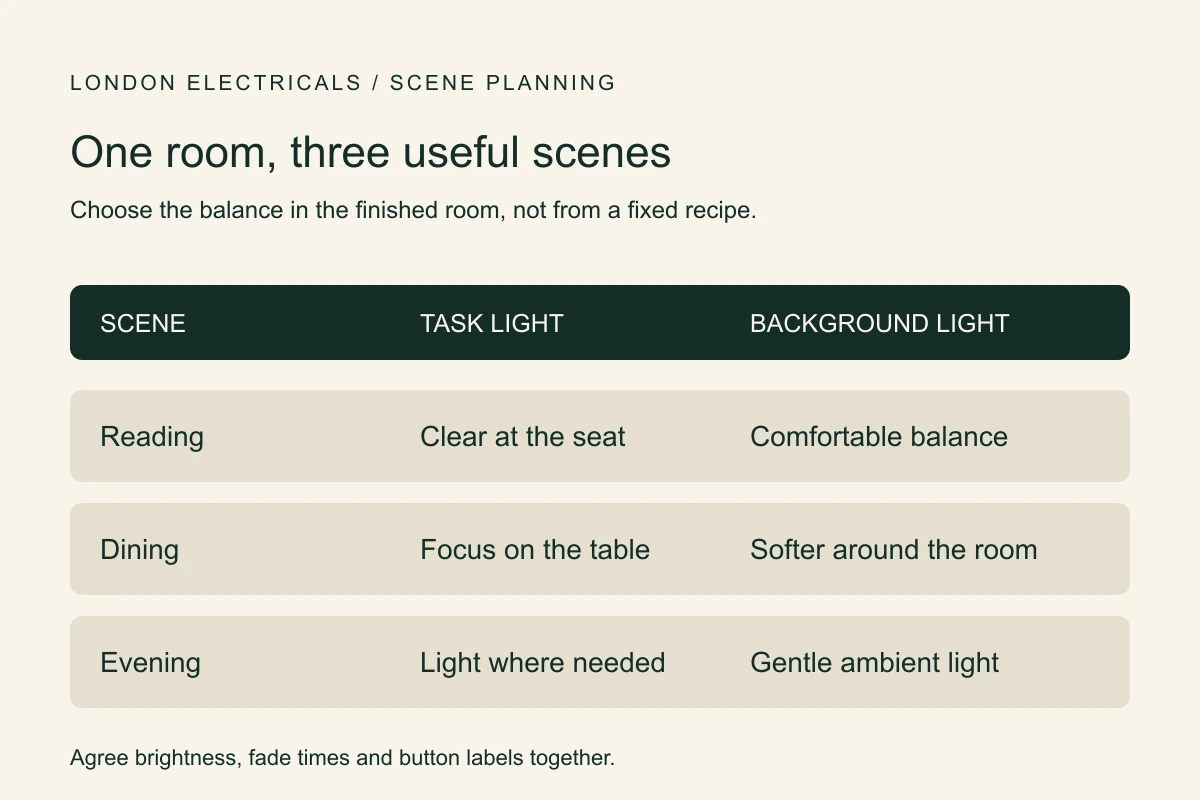
For reading, the light at the seat deserves attention. For dining, the table may be the focus, with softer light around it. An evening scene can bring the room down to a gentler balance while keeping light where it is needed. These are starting points for a conversation, not fixed brightness recipes.
We also review the transition between scenes. A gradual fade can suit a living room, while another area may benefit from a quicker response. Button labels and their agreed actions should match the way the household describes the room. Rako’s Rasoft Pro setup guide covers scene settings and fade rates; the useful part for the homeowner is trying the result together in the space.
Ask everyone who regularly uses the controls to try the agreed scenes. An installation is easier to live with when the same button produces the expected result and the basic controls make sense without explanation.
A service visit can lead to a focused repair, a programming refresh or a planned upgrade. We explain what can be retained and how proposed changes fit the rest of the installation. The aim is a coherent result, not a list of new products.
If you are renovating a room, involve us while the lighting and access arrangements can still be coordinated. That helps us consider circuit layout, drivers, equipment access and control positions together. For a wider project, explore our Rako lighting installation service.
We shape the proposal around the work identified, including installation, programming and testing where required. Access, the number of affected circuits and the equipment involved all influence the scope. You get a clear plan for the next step rather than a price based on a guess about the fault.
At the end of the agreed work, walk through the rooms and try the controls. Check the scenes you use most, including the low-level settings, and agree any final adjustments. Keep the updated configuration records and the details of replacement equipment together.
A short handover should explain the everyday operation, what has changed and how to describe a future service request. It is also a good moment to note any remaining planned improvements, so they can be picked up without starting the investigation again.
Tell us where your home is, what Rako equipment you already have and which rooms you would like to improve. Whether you need a fault investigated or a more considered set of scenes, we will help you plan the next step.
Discuss your existing Rako lighting with London Electricals.
Continue exploring
Services
Restore reliable Rako lighting, refresh your favourite scenes and get ongoing support for an existing London home.
Explore Rako Lighting Repairs in LondonInsights
Explore wired and wireless Rako controls, room scenes and options for bringing an existing lighting installation up to date.
Explore What Is a Rako Lighting System?