Insights
Choosing Lutron Motorised Blinds and Shading
A practical guide to Lutron fabrics, privacy, glare control, window details and the controls that bring your shades into daily life.
Explore Choosing Lutron Motorised Blinds and Shading
Insights
Explore Lutron Palladiom Wire-Free blinds for finished homes: window surveys, fabrics, mounting, battery access and compatible controls before ordering.
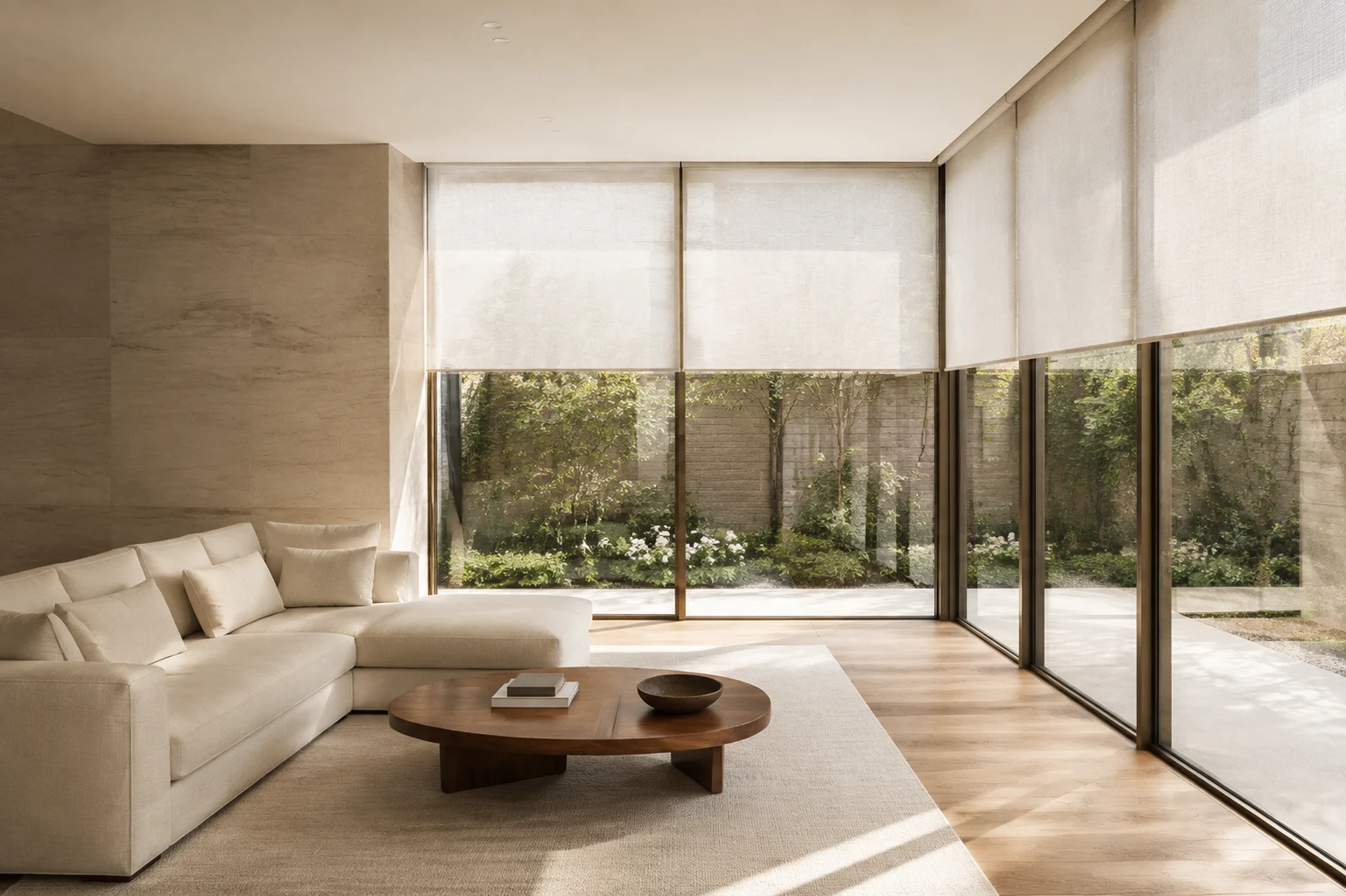
Palladiom Wire-Free blinds are worth considering when you want motorised shading in a finished room without adding a power cable to the blind drive. They combine battery-powered operation with the exposed roller and bracket design associated with Lutron Palladiom. That makes the hardware part of the interior, rather than something that must always disappear behind a pelmet.
For an existing home, the opportunity is straightforward: improve control of daylight and privacy while keeping the installation appropriate to the room. The details still matter. Window measurements, mounting strength, fabric choice, battery access and the control system all need a proper specification.
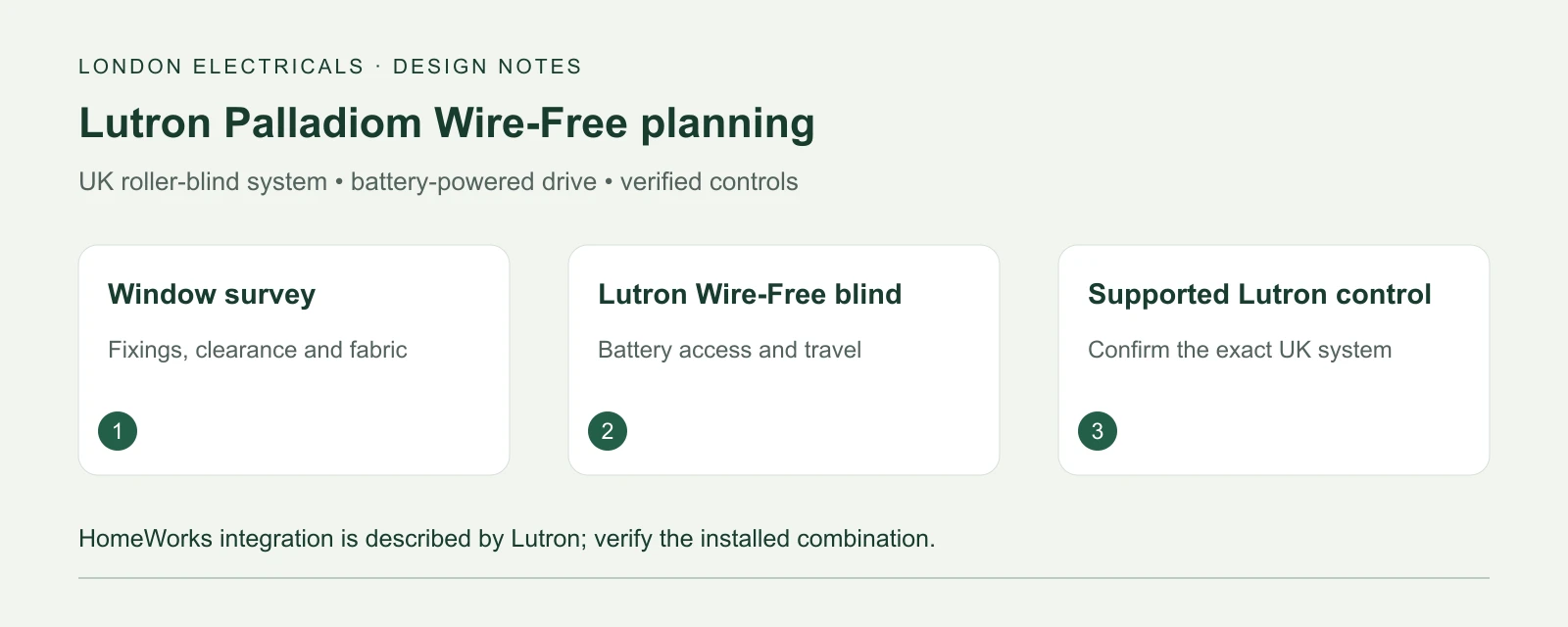
Palladiom is a family, not one interchangeable product. A Wire-Free roller blind is different from a wired roller blind, a keypad or an automated curtain system. Start with the exact product name and the UK specification, especially when comparing photographs or quotations from different regions.
Lutron's UK Palladiom Wire-Free page identifies the battery-powered roller-blind system and its design resources. Use that information alongside the current specification for the selected size, fabric and mounting arrangement. A dimension quoted for another Palladiom product should not be treated as the ordering limit for this one.
In a new build or substantial refurbishment, a wired option may also deserve consideration where suitable cabling can be installed. In a completed room, Wire-Free can be attractive where that power route is absent. Neither is automatically the better answer for every window.
Measure the opening, identify the proposed fixing positions and consider how the blind will sit against the window frame. Ceiling, wall and recess details affect both the appearance and the available mounting arrangement. The fixing needs to suit the supporting construction, not just the finish you can see.
Check handles, opening windows, doors and other obstructions through their normal movement. Think about the path of the fabric and the bottom bar as well as the roller itself. A blind that looks right when stationary still needs to travel freely.
For wide or adjacent windows, discuss alignment and the gaps between blinds. Product limits and bracket choices should be confirmed before an order is placed. In a London apartment, access restrictions and working arrangements may also influence the installation plan. These are useful survey questions, not reasons to complicate the everyday controls.
Fabric changes the daylight, the view and the level of privacy. Samples should be considered at the actual window where possible, rather than chosen from a small screen image alone. Room orientation, exterior lighting and the way the space is used can all influence the choice.
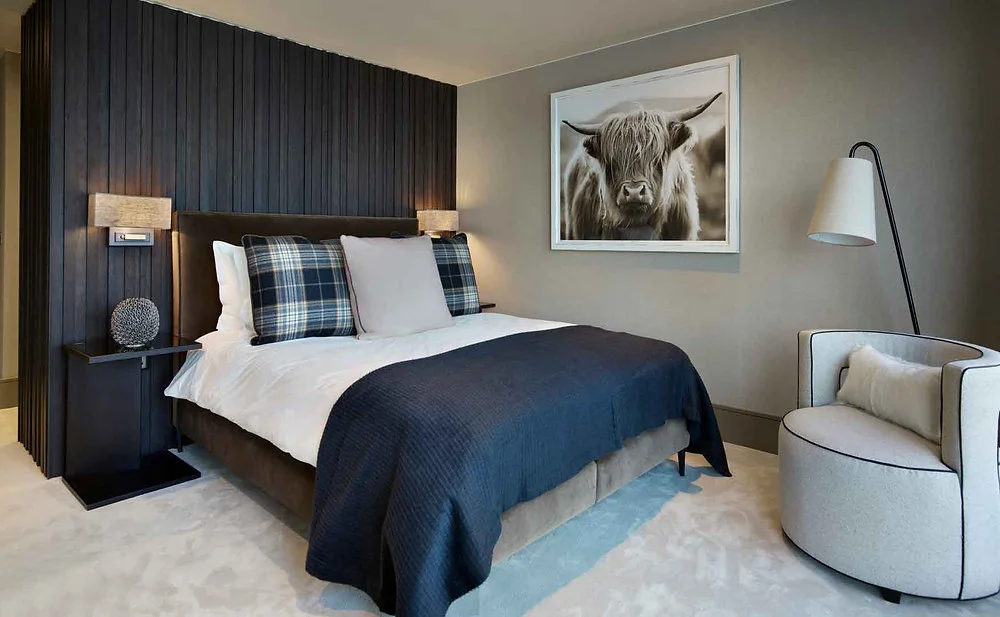
A light-filtering fabric may suit a living room where retaining a view matters. A bedroom may call for a room-darkening fabric and closer attention to the edges. Blackout fabric does not, by itself, guarantee a completely dark room: side gaps, the mounting arrangement and surrounding details must also be considered.
Check privacy expectations during both daytime and evening conditions. An openness factor or a marketing description is not a substitute for discussing the actual view and lighting situation. Where a roller blind cannot deliver the whole brief on its own, another layer of window treatment may be appropriate.
Wire-Free means the drive does not need a permanent electrical power connection. It does not mean maintenance-free. The battery arrangement needs to remain accessible after the installation, including after curtains, joinery or other surrounding finishes are completed.
Lutron publishes battery-life information for this product, but the interval in an individual installation depends on its specification and use. Plan a sensible replacement arrangement rather than promising every homeowner the same number of years. Follow the current manufacturer's instructions for the exact batteries and the replacement procedure.
High windows deserve particular thought. Consider how someone will safely reach the battery compartment and whether a planned service visit is the practical choice. Good access can preserve the clean appearance while making ownership much easier.
Decide whether the main action should be a local control, a room scene or an agreed schedule. A favourite position can be useful for everyday glare or privacy adjustments. Keep the names and button functions simple enough for the whole household to understand.
Lutron's UK product information describes integration with HomeWorks. Compatibility still needs checking for the exact existing system, radio region, equipment and programming. Do not assume a photograph of a Lutron keypad proves that every blind and controller combination is supported.
When blinds and lighting work together, start with a few useful routines: daytime use, evening privacy or watching television. Check the travel, position recall and any scheduled action during commissioning. The finished result should feel predictable, with a clear way to make a manual adjustment when the routine changes.
Lutron announced Palladiom drapery on 20 July 2026. It is a separate curtain-system development, not a new name for the Wire-Free roller blind discussed here. That distinction is useful when an interior scheme includes both curtains and blinds.
If you prefer soft curtains at a particular window, discuss the current UK product, supply arrangements and integration at quotation stage. Choose from the actual room brief rather than assuming the newest announcement automatically replaces the product that already fits it.
Your proposal should identify the blind system, fabric, hardware finish, mounting arrangement, measured sizes and controls. It should also set out installation, programming, handover and the battery-maintenance arrangement. Keep a record of the specification so future service work starts with the correct product information.
For a broader comparison, our guide to choosing Lutron motorised blinds covers the wider decision. This page focuses on whether Palladiom Wire-Free suits an existing room.
Talk to London Electricals about Lutron shading. Share window photographs, approximate dimensions and what you want to change about the daylight or privacy. We can help turn that into a considered specification, with finishes and controls that belong in your home.
Continue exploring
Insights
A practical guide to Lutron fabrics, privacy, glare control, window details and the controls that bring your shades into daily life.
Explore Choosing Lutron Motorised Blinds and ShadingServices
Expert design, installation and support for Lutron blinds and curtains — planned around your windows, interiors and the way you live.
Explore Lutron Sivoia QS Blinds