Beautiful dimming
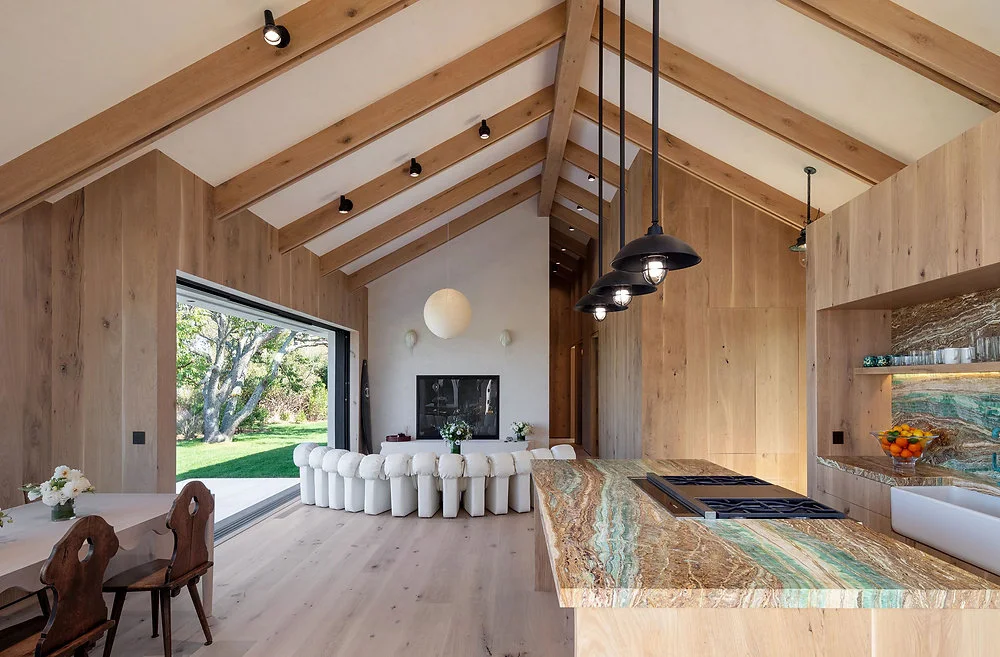
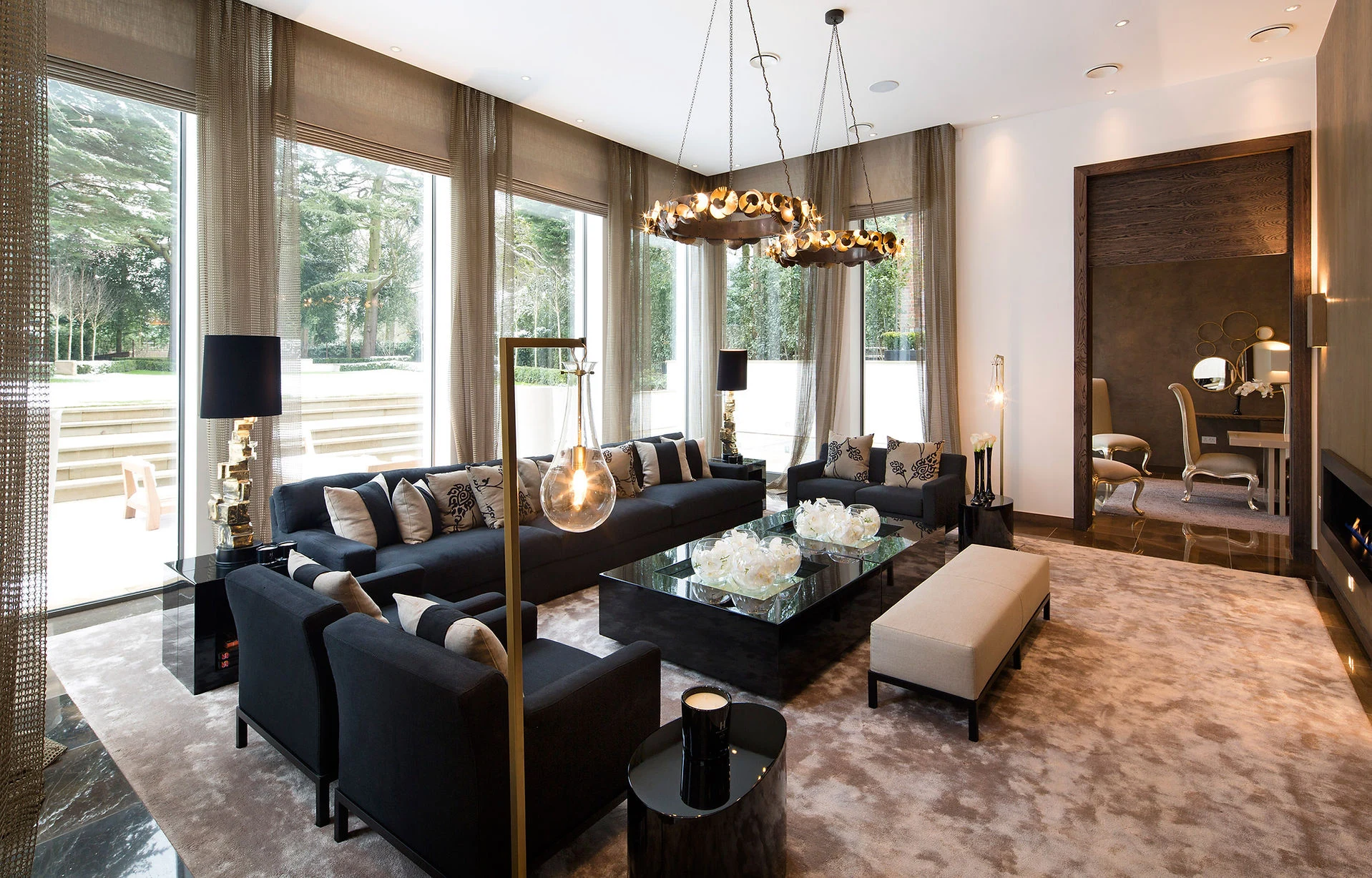
Carefully matched fittings, drivers and controls bring depth and atmosphere to each lighting scene.

Services
Design, installation, programming and commissioning for Lutron HomeWorks lighting and compatible shading in London homes.
Lutron HomeWorks
Bring lighting and shading together with Lutron HomeWorks. We design the scenes, controls and details around your interiors and the way you live, from the first ideas through to the finishing touches.
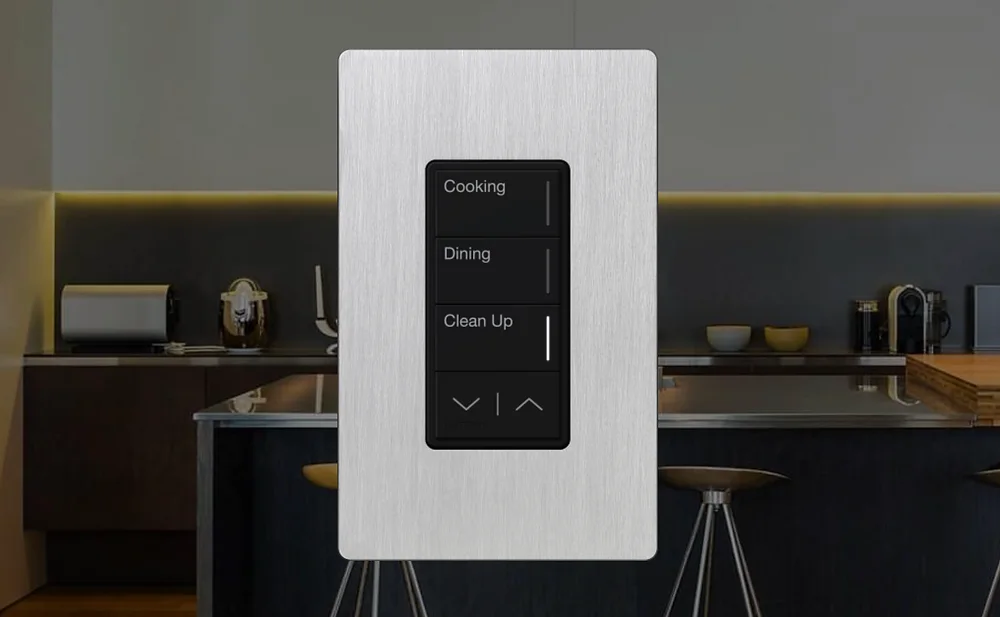
Welcome guests, settle in for the evening or prepare the room for dinner with a single touch. HomeWorks brings individual lights together into scenes, with compatible shading completing the atmosphere.
We plan the controls around the way you move through your home: a welcoming entrance, a bedside All Off, or a favourite setting ready when you need it. Behind that simplicity sits a carefully coordinated lighting design.
Start planning your Lutron system, explore our Lutron cost guide, see HomeWorks at Woodrow, or discover how we work with interior designers.
Choose a UK square Alisse or Palladiom keypad and see how Evening, Entertain, Cinema and Goodnight change the room. Watch the lights dim and the shades move, adjust the levels to your taste, or open the room full screen to explore.
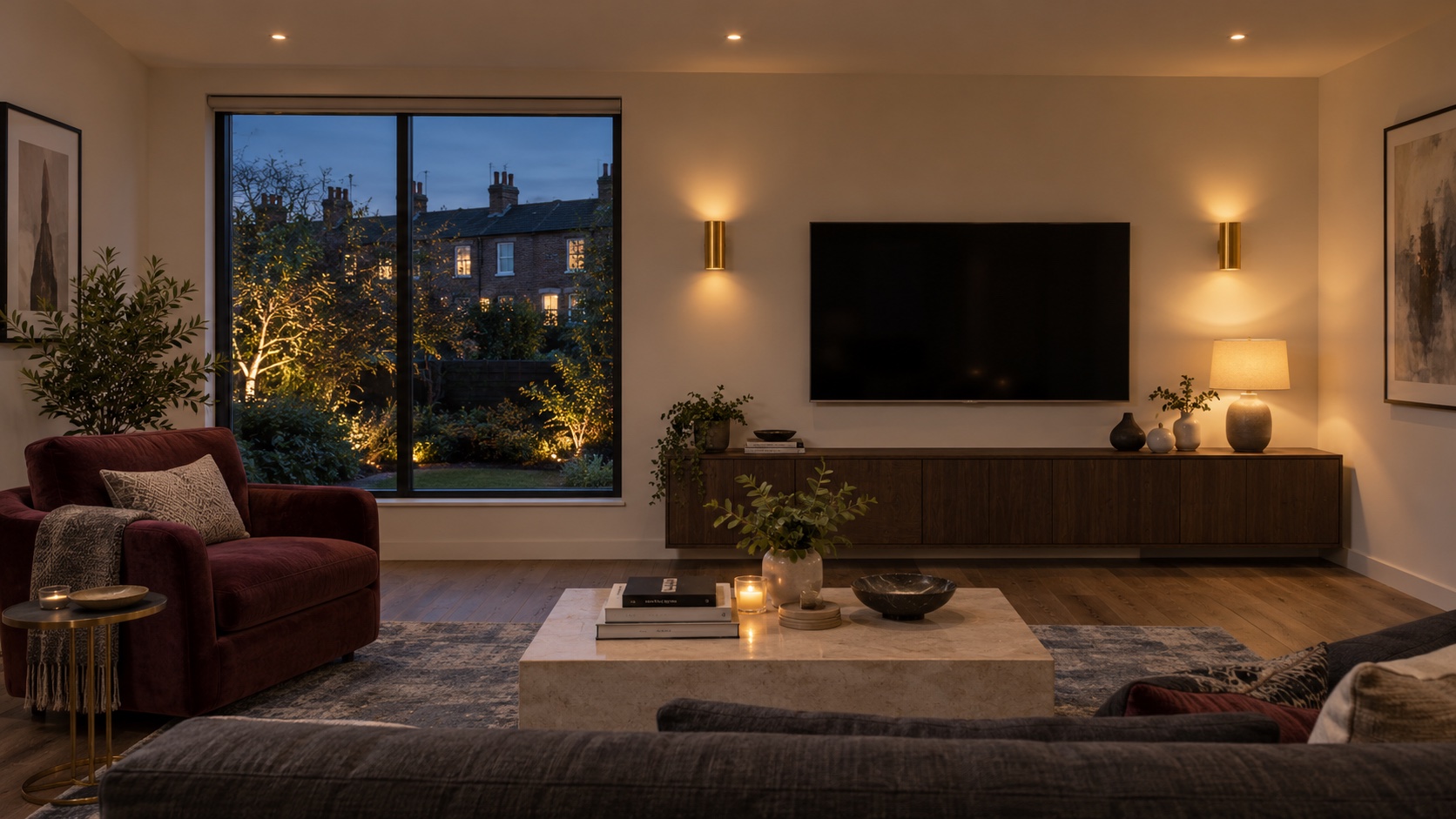
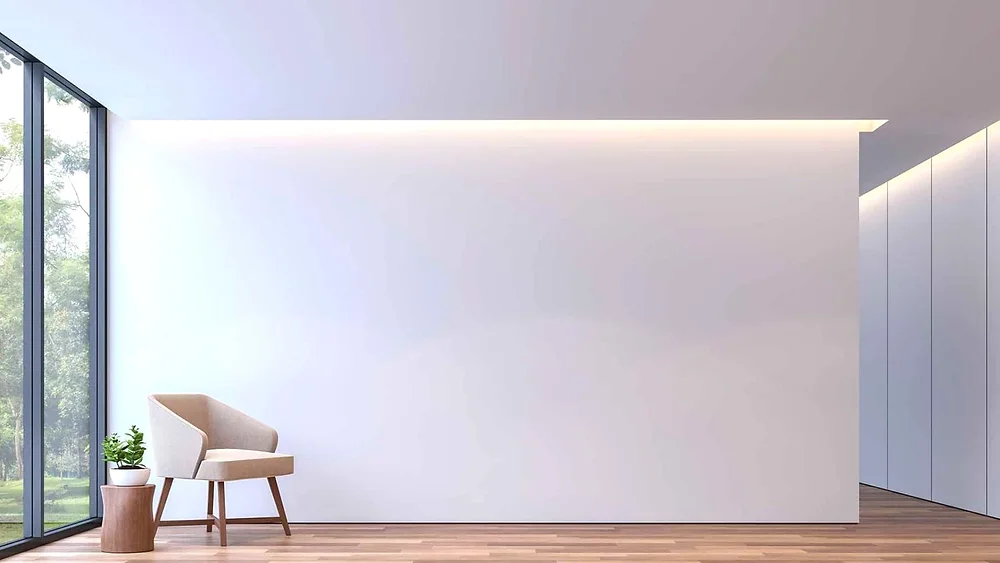
Soft light, a comfortable seat and a little privacy.
An illustrative room, with example settings. Lighting levels, shade movement and sound are visual demonstrations, not measurements. Final equipment, compatibility and commissioning are agreed for your home.
Lutron shades & fabrics
Choose exposed Palladiom hardware or Sivoia QS with a ceiling pocket, a client-made pelmet or Lutron fascia. Explore the fabric colours and textures, see your shade open and close, and try a keypad with your chosen fabric. We turn your favourite combination into a tailored proposal.
Tap the map or use its arrow keys to measure a point. Numbered lights match your fitting schedule. Dashed outlines show furniture beneath the measurement plane.
We sum Orluna’s measured candela distributions at the true distance and angle to this horizontal surface. Each light uses its measured beam and colour temperature; fitting output and lighting-layer output multiply together. The map keeps a fixed 0–1,000 lux colour scale.
This is direct light on an unobstructed measurement plane. Furniture outlines help locate the lights; furniture shadows, reflected light and daylight are excluded here. The average and sampled peak use a regular grid. All measured fittings point vertically downwards. Screen colours are an impression; our final lighting design checks the full scheme and glare.
Profiles cover Origin Natural Curve Fixed, Curve Adjustable, Infinity Midi Fixed with black baffle and Fina Fixed. Other fittings stay in your design but are excluded from lux totals until an exact profile is available.
Explore the details of this room. Save your ideas when you are ready.
Concept design preview. Fitting symbols and light effects are illustrative; the final beam, driver, quantities and placement are coordinated with your drawings.
Try the details
Compare UK square Alisse and Palladiom against your wall colour. Press a scene button to try the illumination, then explore how those scenes change a furnished room in the lighting walkthrough.
Evening selected.
The engraving or halo illuminates; the metal finish stays the same. Compare the final finish with a physical sample.
Try the lighting scenes in a room →We bring together your lighting brief, keypad layout, panel design, scene programming, installation coordination and commissioning. You have a clear route from the initial plans to lighting that feels right in every room.
For motorised shading, we work with the design team on fabrics, pockets, power and controls, so the window treatments sit naturally within the interior and the wider system.
Great lighting is as much about how it behaves as how it looks. We coordinate your chosen fittings and drivers with the right dimming controls, then refine the levels and transitions that give each scene its character.
Whether the design uses phase control, 0–10 V or DALI, we check compatibility with the specified fittings. Panels, cable routes and service access are planned with the project team, keeping the technology discreet and the installation organised.
That early attention to detail gives your architect, interior designer and installation team a coordinated plan to work from.
Carefully matched fittings, drivers and controls bring depth and atmosphere to each lighting scene.
Keypads and scenes placed around everyday routines, with finishes that complement your interior.
A clear handover, useful system records and a route for future adjustments as your home evolves.
Review the property, drawings, circuits, loads, user needs and connected home systems.
Define panels, processors, controls, interfaces and responsibilities with the project team.
Coordinate panels, controls, fittings, drivers and interfaces against the agreed information, with changes recorded.
Test circuits and user journeys, refine scenes, preserve the current project information and hand over the agreed controls.

Woodrow Mansion combines a property-wide HomeWorks QS design with Savant, Orluna, KNX heating and Ruckus networking. St John’s Wood features centralised HomeWorks QS with seeTouch keypads and coordinated control, while La Tzoumaz uses HomeWorks QS across a chalet with Sonos and Ruckus.
Explore each project to see how the lighting controls were integrated with the wider home.
Choose the route that matches the property, the installed system and the decision in front of you.
Start with what a Lutron lighting system does, read how to plan your Lutron budget, use the HomeWorks planning guide, or build an outline system brief.
Use our existing-system service, read the servicing and fault-check guide, or review the checks involved in an Illumination-to-QSX upgrade.
Compare Lutron keypad families, explore Sivoia QS blinds and shades, or see our HomeWorks and Sivoia QS guide for interior designers.
See when Lutron RA2 Select installation and support may suit a smaller or less invasive residential project.
Explore Lutron Athena for suitable connected commercial projects and Lutron Vive for flexible wireless commercial lighting control.
Explore the Woodrow Mansion HomeWorks project, read our anonymised HomeWorks QS module-replacement field note, or browse selected lighting-control work.
A lighting-control system affects more than the wall plate. Start with the intended atmosphere, room use and activities: which lighting should work together, how shading supports the daily routine and how the client wants to control the space.
Keypad positions should make sense at entrances, bedsides and the routes through the home. Coordinate them with joinery, artwork, switches, sockets and other wall-mounted controls.
We help you choose compatible keypads, faceplates and engraving that complement the surrounding materials, and coordinate ordering with your project programme.
Describe what the client should experience—such as Welcome, Relax, Dining or All Off—then translate that intent into circuits, dimming levels and shading behaviour.
Drivers, fittings, control method, blind pockets, motors, power and cable routes should be agreed before ordering and first fix.
Discuss lighting control or explore our interior-designer service.
HomeWorks brings whole-home lighting and compatible shading together into beautifully simple controls. We tailor the design to your rooms, interiors and everyday routines.
Yes, we plan upgrades for existing Lutron homes. We identify your system generation and available programming, then recommend the compatible options for the changes you want.
Yes. Early coordination helps align keypad locations, lighting scenes, dimming requirements, joinery, window treatments and the wider electrical design.
Yes, HomeWorks can coordinate compatible motorised blinds and curtains with your lighting. We bring the motors, fabrics and installation details into the design so everything works together.
Carefully coordinated fittings, drivers and dimming controls give you smooth, reliable lighting. We handle those details with your project team as part of the HomeWorks design.
Ideally before electrical first fix and before lighting fittings are finally selected. Early design gives the team time to coordinate panels, cable routes, keypad locations, drivers, shading pockets and equipment access.
Smooth dimming comes from a compatible combination of fitting, driver and control. We check that combination for your chosen lights and refine the dimming during commissioning.
A practical introduction to your controls and scenes, the agreed system records and available programming backups, plus a clear route for support and future changes.
Useful reading
Insights
A personal approach to Lutron design, installation and aftercare, from the first room brief to the final lighting scenes.
Explore Why Choose London Electricals for Your Lutron Project?Insights
Explore the details that make Lutron appealing: dimming, keypad design, coordinated shading and room scenes shaped around daily life.
Explore What Makes Lutron Stand Out in a Home?Insights
See how coordinated lighting and motorised shades can make a home feel welcoming from the morning routine to the evening film.
Explore Lutron Lighting and Shading Through the DayTalk to an engineer
Share your ideas for the home. We will help shape the design, installation or ongoing care around you.