Part O, Electric Blinds and Motorised Shades: Why Shading Belongs in Every New Home
Part O makes overheating a core design consideration for new residential buildings in England. Discover why electric blinds and motorised shades should be planned early on every new-build project.
By London ElectricalsElectric BlindsMotorised ShadesNew Builds
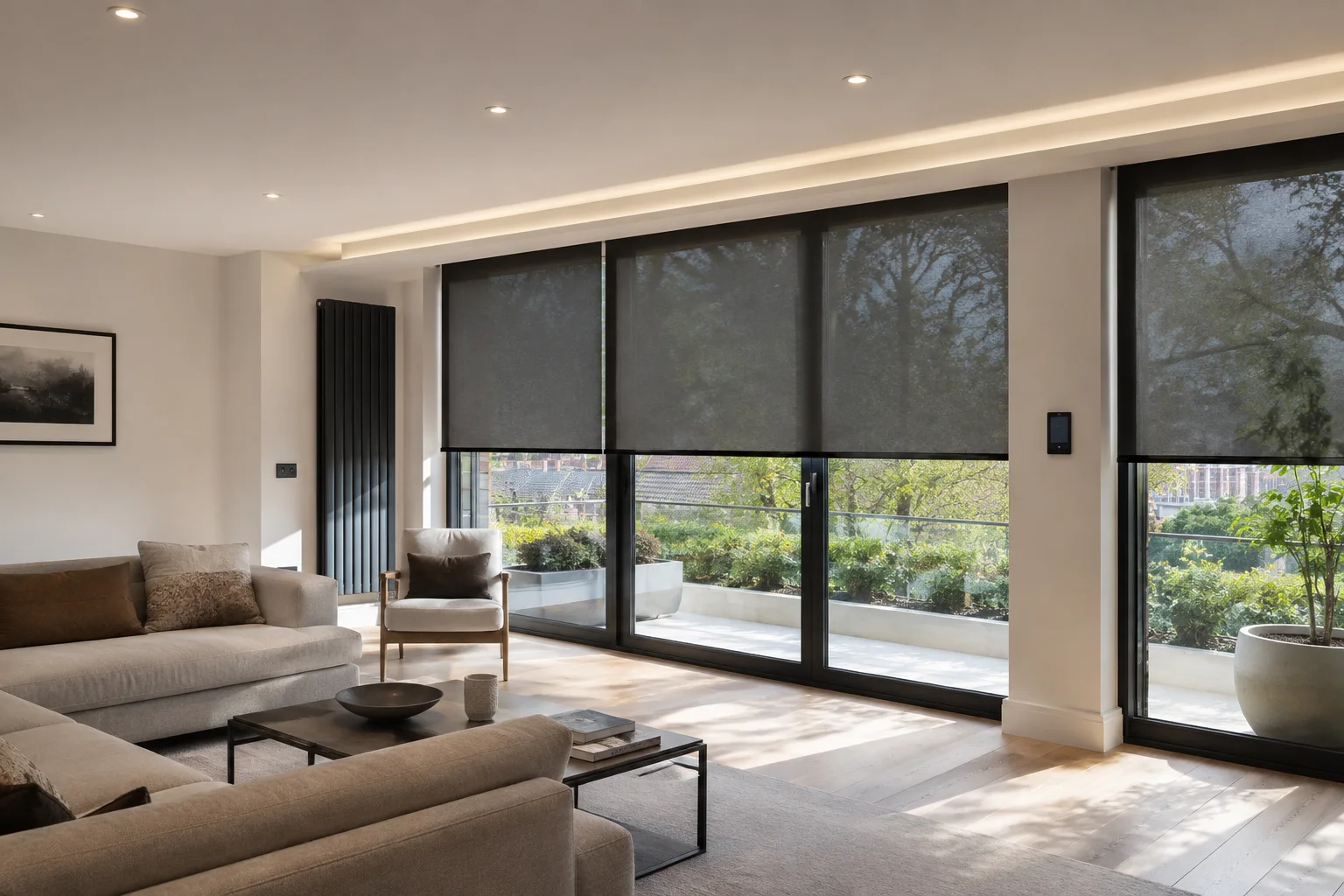
Integrated motorised blinds can help manage solar gain while preserving comfort and daylight.
Large areas of glass make a new home feel bright, open and connected to the garden or city beyond. They can also let in a great deal of summer heat. That is why overheating is now a design issue from the very first drawings — not a finishing touch once the curtains are chosen.
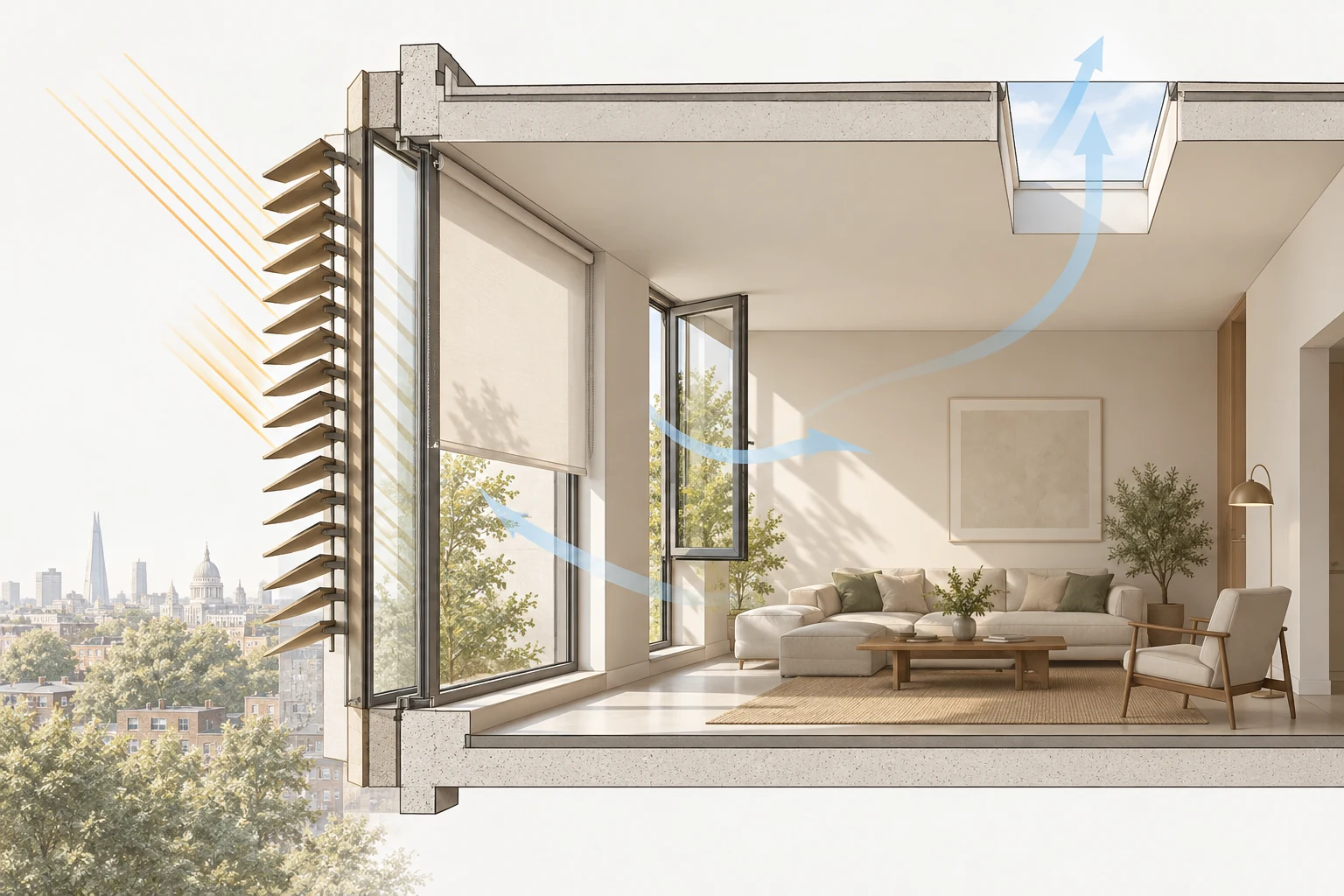
For new residential buildings in England, Approved Document O (usually called Part O) sets out guidance for reducing overheating risk. It focuses on two things: limiting unwanted solar gains and providing a way to remove excess heat. At London Electricals, we believe that properly designed electric blinds and motorised shades should be considered as standard on every new-build project with meaningful glazed elevations, rooflights or sun-facing rooms.
What Part O means for new homes
Part O applies to new residential buildings in England. It does not prescribe one product or one look; it asks the design team to address overheating in a coordinated, evidence-led way. The right approach depends on the home, its orientation, glazing, location, ventilation strategy and the way each room will be used.
Motorised shading is not a shortcut to compliance on its own. Your architect, energy assessor and building-control team should confirm the design route and the evidence needed for the project. But shading is one of the most useful, practical ways to manage bright sunlight at the point it enters the home — and it is far more effective when it is planned alongside the glazing, lighting, electrical and control design.
Why electric blinds and motorised shades belong in the brief from day one
Manual blinds are easy to overlook when a room is busy, and they are often left open when the sun is at its strongest. A motorised system makes shading effortless: one touch, a wall keypad, a handheld remote, a phone or a whole-home scene can bring the blinds into position. Better still, schedules and sensors can react consistently as light levels and the day change.
For London homes, where new-build layouts often pair generous glazing with compact room sizes, that consistency matters. Bedrooms, top-floor rooms, west-facing kitchens, garden rooms and glazed extensions can all benefit from a planned shading strategy. The aim is not to turn the house dark; it is to soften glare, protect finishes and help keep the home comfortable while retaining useful daylight and views.
The practical benefits go beyond overheating
Comfort: reduce glare on screens, dining tables and living areas without losing control of the room.
Sleep: blackout blinds or lined curtains can make bedrooms more restful and private.
Protection: filter strong sunlight to help protect flooring, fabrics, artwork and furniture.
Privacy: add a simple evening privacy scene across the home.
Ease of use: bring multiple blinds or curtains together in one reliable scene rather than operating each window separately.
Future-ready design: leave the right power, containment and control infrastructure in place while the building is open.
Plan the detail early: it is where the best installations are won
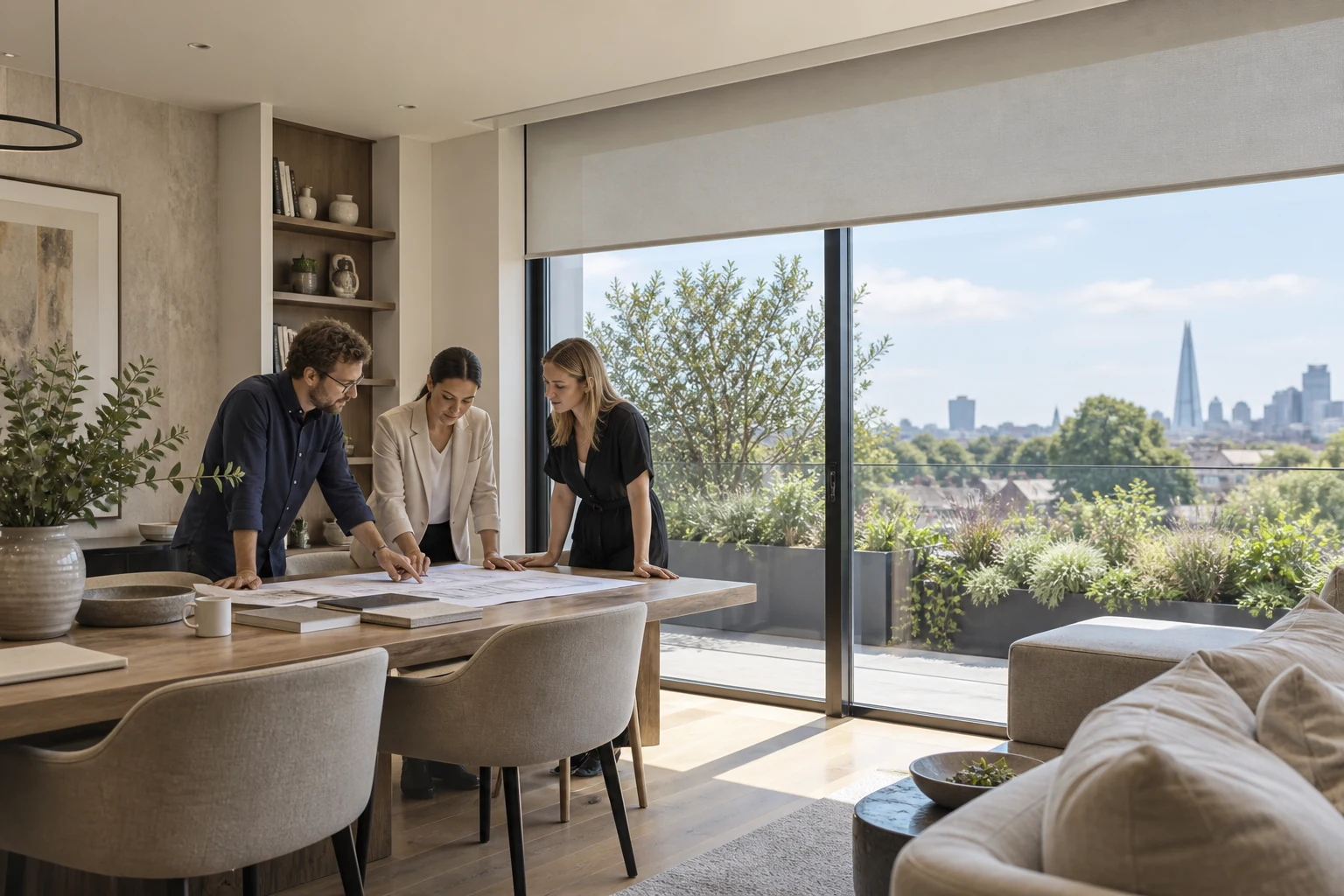
The cleanest motorised shading installations are coordinated before plasterboard, joinery and decoration. We work with architects, interior designers, builders and M&E teams to establish the practical details early, including:
blind pockets, recesses and curtain tracks that are sized correctly and remain accessible for service;
power provision and containment at each window or treatment position;
the right fabric openness, blackout requirement and colour for the room and elevation;
control locations that make sense at the doorway, bedside and in the wider smart-home system;
interfaces with lighting, heating, ventilation and security scenes where appropriate; and
a clear handover so the family knows exactly how the home responds.
This is also the point to decide where the shading should be discreetly hidden, where it should become part of the interior design, and which spaces need a different treatment. A rooflight blind, a kitchen roller shade, a bedroom blackout blind and a living-room curtain track do not have to be the same product to work as one system.
A simple way to use motorised shading every day
The best automation feels natural. A morning scene can raise bedroom blinds gradually; a daytime scene can lower solar-control shades on the brightest elevations; an evening scene can close privacy blinds and bring the lighting to a warm level. When the house is away or unoccupied, the same system can protect interiors without relying on someone remembering each window.
London Electricals can design a standalone electric-blind installation or integrate it with lighting control and smart-home platforms. The result should always be intuitive first and impressive second: a home that is calmer, more comfortable and easier to live in.
Make shading part of every new-build conversation
Part O has made overheating a core consideration for new residential buildings in England. For us, the wider message is straightforward: when a new home has significant glazing, electric blinds and motorised shades deserve a place in the original brief. Planning them early gives the design team more choice, delivers a neater installation and gives the homeowner a practical tool for comfort from the first summer onwards.
Part O does not mandate a particular blind or shading product. It requires a suitable overheating-mitigation strategy for new residential buildings in England. We recommend assessing motorised shading as a standard design option on every new-build project with significant solar exposure or glazing, then confirming the final approach with the project’s design and building-control team.
Do motorised blinds make a home Part O compliant?
Not by themselves. Compliance depends on the complete building design, including solar gain, glazing, ventilation, location and the chosen assessment method. Motorised blinds can be a valuable part of that strategy, but the project team must verify the overall solution.
Can motorised shades be added to an existing home?
Yes. Retrofitted solutions are available for many windows and can make an immediate difference to glare, privacy and day-to-day comfort. We will assess the window treatment, power options and the control experience before recommending the right route.
Electric blinds, curtains, shades, rollers, for the modern home, using an electronic blind or curtain to control glare and energy transferance in your home is key. London Electricals are fully qualified electric blind and curtain installers…
Lutron Sivoia QS Window treatment for blinds, shades, curtains, Lutron Sivoia QS roller blinds are the best roller blinds system in the business with Ultra Quiet motion and automatic hem bar alignment (IHA). patenteded hembar alignment give…