A well-chosen fitting brings the right light to the right place. We look at the surface it illuminates, how it appears from a sofa or worktop and how it dims with the other layers in the room. Those details make the finished space comfortable and attractive.
Visual comfort is not one product specification. It is the result of beam control, brightness, contrast, reflections, colour quality, mounting position and the activities taking place in the space.
Begin with the task and the surface
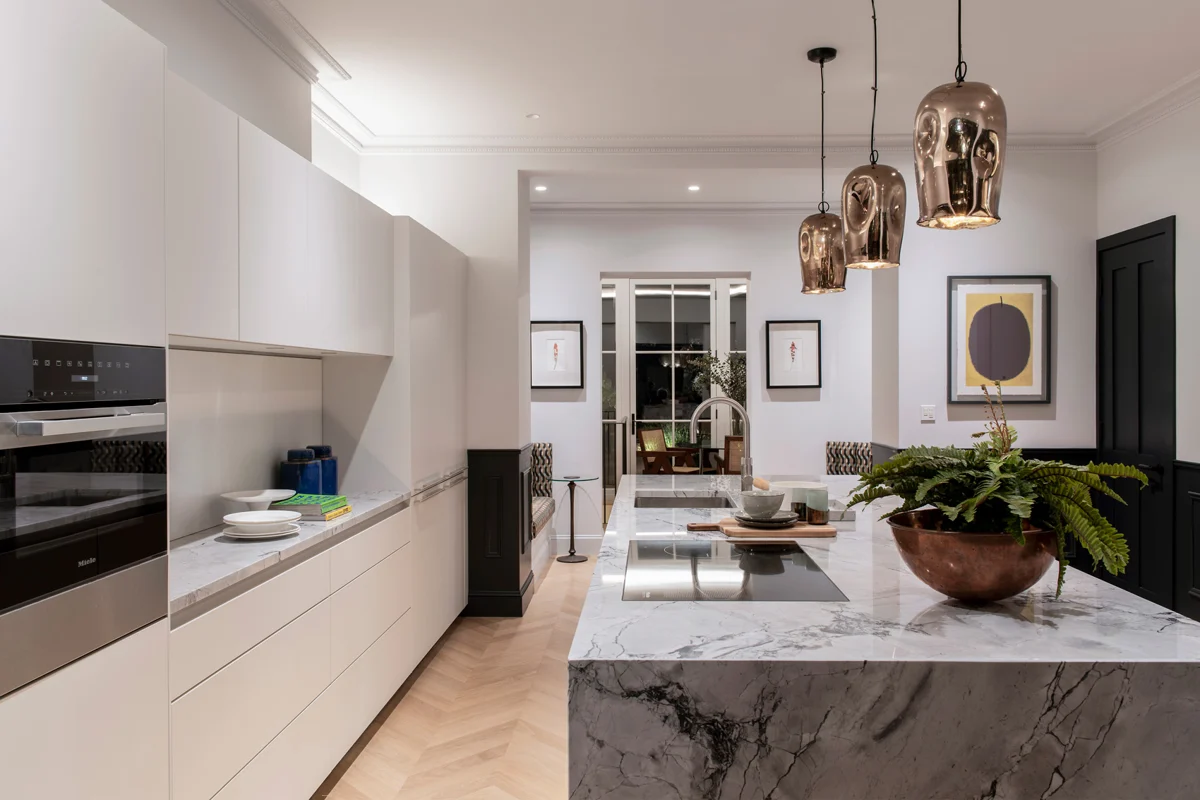
Ask what needs light and from which direction. A kitchen worktop needs useful task light without casting a shadow from the person preparing food. Artwork may need controlled accent light. A sitting room benefits from balanced vertical and low-level illumination rather than a ceiling full of identical bright apertures.
Beam angle and distribution
A narrow beam concentrates light and can create strong contrast. A wide beam spreads light but may spill onto areas that do not need it. The correct choice depends on ceiling height, distance to the target, aiming angle and the size of the surface. Photometric information is more useful than wattage alone.
For adjustable fittings, check whether the intended aim can be achieved without exposing a bright source from normal sightlines. For fixed downlights, coordinate the layout with joinery, furniture and circulation rather than simply setting out a geometric grid.
Glare and reflections
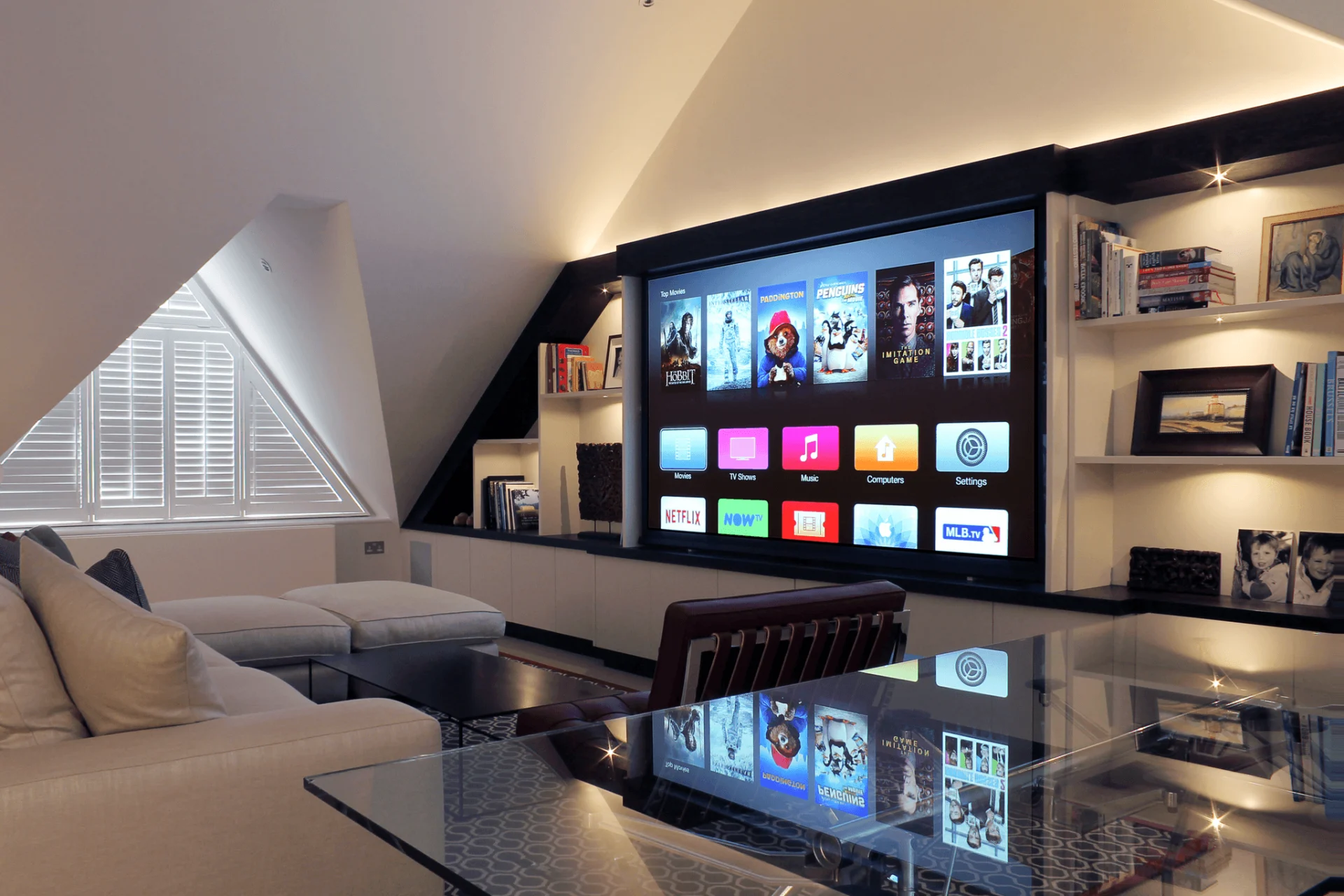
Glare can come from seeing the bright source directly or from reflections on stone, glass, artwork and screens. Deep-set optics, baffles and careful positioning can help, but every room is different. A fitting above the edge of a television may be more troublesome than one further forward, even if both look correct on plan.
- Review fittings from sofas, beds, dining chairs and working positions.
- Check polished worktops and glass doors for reflected sources.
- Consider vertical light so the room is not bright only on the floor.
- Keep task light useful while reducing unnecessary brightness elsewhere.
Colour temperature and colour quality
Correlated colour temperature describes the appearance of white light, from warmer to cooler, but it does not describe everything about colour rendering. Compare real samples on the project's paint, timber, stone, fabrics and artwork. Two sources with the same headline colour temperature can make finishes look different.
Consistency also matters. Decorative and architectural fittings used together should not produce obviously conflicting white tones unless the contrast is deliberate.
Driver and dimming compatibility
The driver is part of the lighting system. It determines the electrical control method and influences dimming range, flicker, noise and low-level stability. Record the exact fitting and driver, not only the decorative product name.
Test the fitting with the proposed control equipment before ordering large quantities. Check turn-on, fade, low-end stability and behaviour after power loss. A good result at full brightness does not prove that an evening scene will work.
Use a sample review
- Install the proposed fitting, driver and control on a representative circuit.
- Review it against the actual finishes and intended mounting detail.
- Check the result from the main seated and standing positions.
- Test the full dimming range and the levels proposed for each scene.
- Record the approved model, optic, colour, driver and control combination.
This sample is especially valuable when a fitting will be repeated across many rooms. The cost of one early test is normally much lower than replacing a poor combination after decoration.
Commission the completed room
Final scene levels should be reviewed after furniture and finishes are substantially complete. Adjust task, ambient, accent and decorative layers together. The goal is not to run every circuit at the same percentage; it is to make the room work for its intended activities.
We design the lighting around visual comfort and daily routines, then fine-tune the scenes with you in the finished room.
Coordinate fittings with the control design
Send the reflected ceiling plan, fitting schedule, finishes and scene brief before first fix. London Electricals can review control methods, circuits, sample testing and keypad requirements. See our lighting-control service, guide to lighting design before first fix, and design-team coordination.