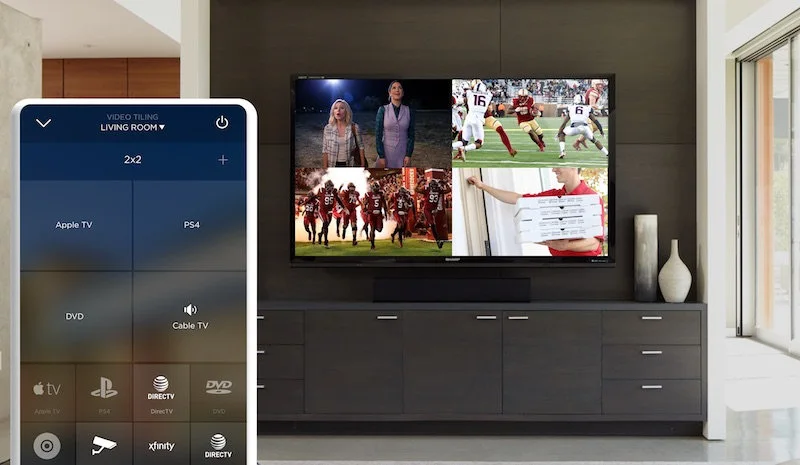
Video over IP distributes audiovisual signals through a suitable Ethernet network. It can be a useful way to share sources between screens while keeping equipment together in a rack, especially in a home with several viewing rooms or a commercial space with many displays.
Sources, screens and flexible routing
An encoder takes a source into the distribution system; a decoder supplies a display. The design can route a selected source to one screen or several. We begin with the number of sources, the rooms they serve and how people want to use them at the same time.
Central equipment can include supported television receivers and streaming sources. Local sources can also have a place where that suits a room’s everyday use.

Picture quality belongs in the specification
Resolution, refresh rate, HDR, colour format, compression and latency are choices made for the selected platform. We match the distribution system to the displays and viewing needs, then test the intended formats through the complete signal path.
That is particularly useful for a project combining ordinary television, a cinema and gaming, where each room may have different priorities.
Design the network with the video system
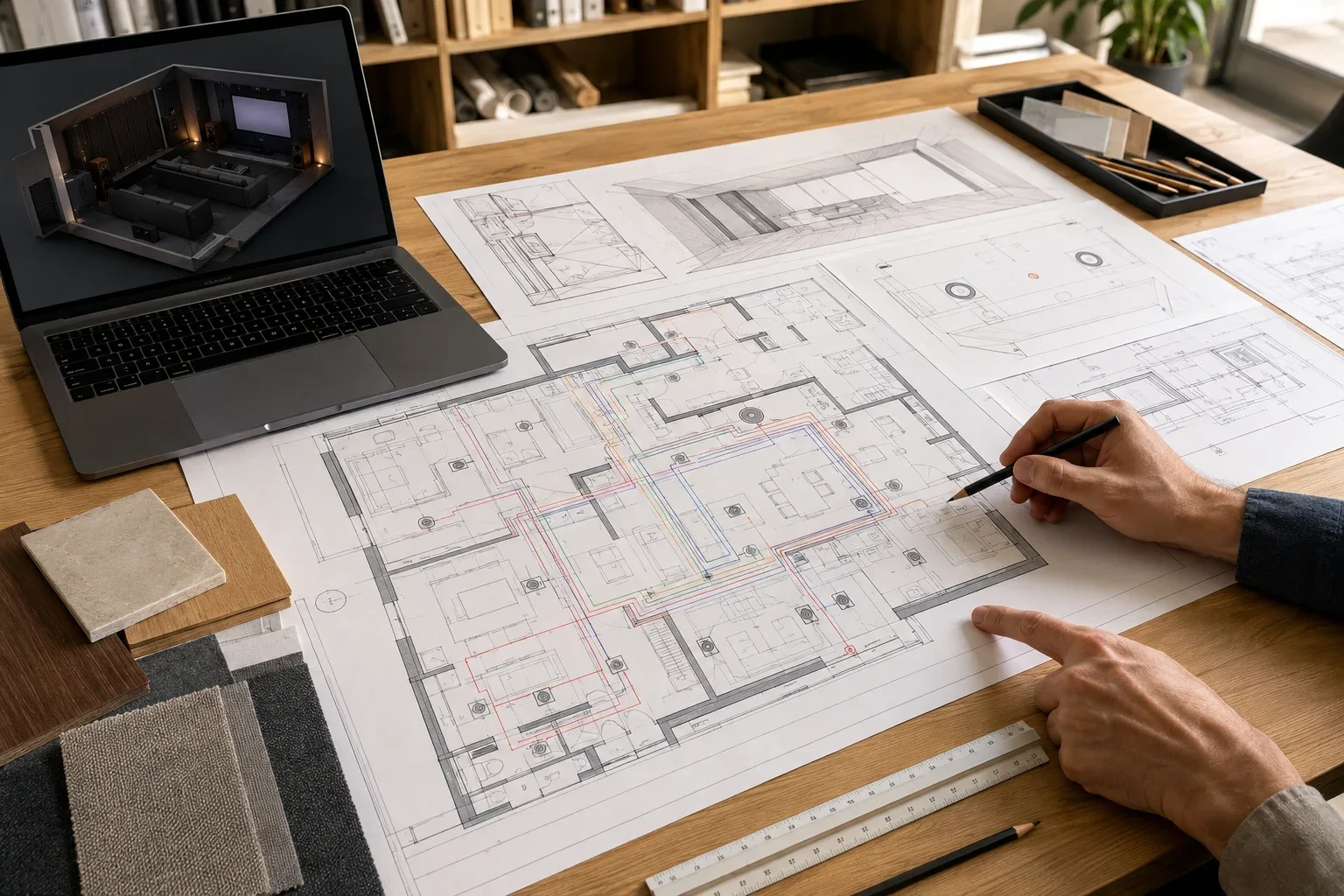
The selected encoders and decoders determine bandwidth, switch features and multicast configuration. We plan the switches, uplinks, cabling and traffic separation together with the manufacturer’s requirements. Cabinet power, ventilation and service access are part of the same design.
Make the controls feel simple
A room control should let you choose what to watch and adjust the sound without needing to know where the source lives. We programme and test those journeys, then hand over clear records and a support route.
Talk to our AV design team about the screens, sources and rooms in your project.